ABLE4Education
OIDE Endorsed Programmes
ABLE4SchoolLeaders
How and why relationships matter in schools.
We invite school leaders and aspiring leaders to join us in this small group, reflective, experiential, and nurturing online learning experience to deepen your understanding of why quality relationships in schools matter – and the impact they have on well-being and learning outcomes.
How and Why Relationships Matter in Schools is our evidence-based training programme, specifically developed for school leaders and endorsed by Oide, the Department of Education’s schools’ support services (formerly known as CSL– the Centre for School Leadership).
The programme runs online via Zoom over five dates, followed by two Community of Practice days.
This growing Community of Practice provides an opportunity for school leaders interested in taking a relationship-centred approach in their schools to network with colleagues nationally. It supports further reflection, knowledge sharing, peer-to-peer engagement, and problem-solving in a safe, online space.
This training will give you the skills, insight, and knowledge to nurture quality relationships in your school for better outcomes. It also provides you with a framework to manage your time and boundaries for your own health and wellbeing via our ABLE brief intervention model.
Our evaluations show that 83.3% agreed that the course was relevant to being a school leader, and agreed that it developed their skills to build quality relationships.
Cork school goes the extra mile to help the families of homeless pupils
Dr. Maeve Hurley, founder of Ag Eisteacht and now Relationships in Practice, has long championed the importance of relationship-centred support for children, families, and communities.
In this RTÉ News feature, Maeve speaks about the power of compassionate, emotionally supportive school environments and the importance of understanding behaviour through the lens of stress, adversity, and lived experience. The article highlights the meaningful work being carried out by North Presentation Primary School in Cork, whose staff completed Ag Eisteacht training to help support children and families experiencing homelessness.
Maeve’s message remains central to our work today — that through listening, empathy, and relational understanding, every person has the potential to make a positive difference in someone’s life.
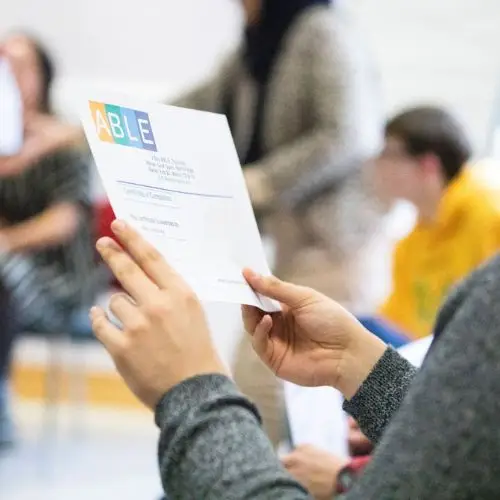
ABLE4Teachers Summer Course
EPV Approved
ABLE4Teachers – How and Why Relationships Matter in Schools’ is our DES-approved training programme for teachers, SNAs, principals, Home School Liaison Officers and School Completion Programme Coordinators to support quality relationships in schools.
‘This course was outstanding. As a teacher, the ABLE model will be invaluable as I progress throughout my career. I wish I had access to this course 10 years ago as a new teacher. EVERYBODY should know about this course.’
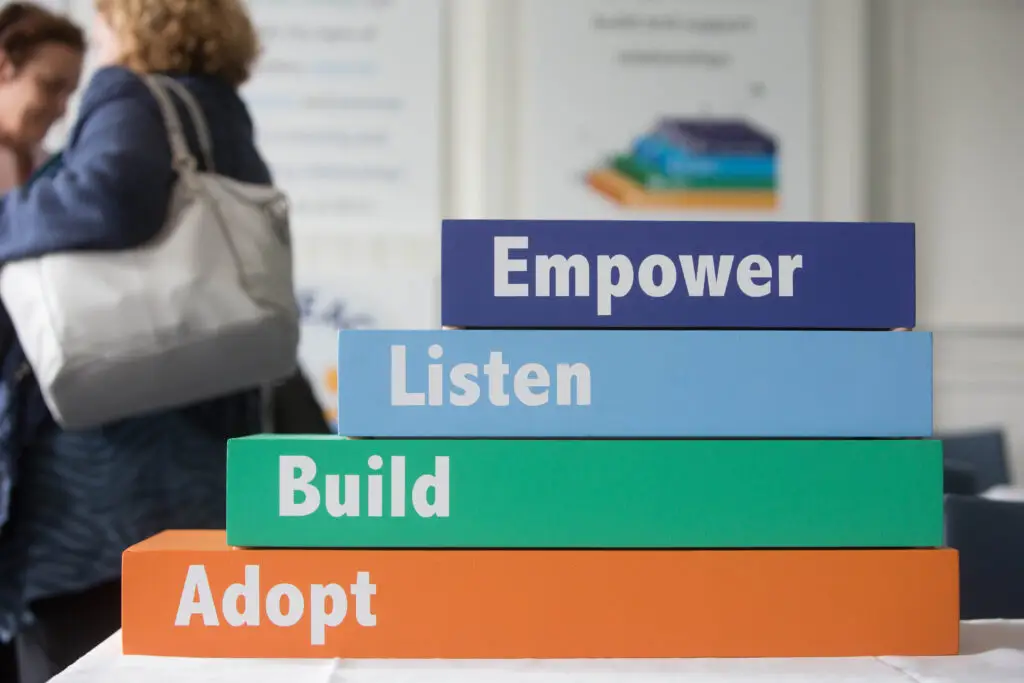
ABLE – “Adopt, Build, Listen, Empower”
ABLE4Educators
Our three-day training programme is suitable for teachers, lecturers, and early childhood professionals.
Relationships in Practice’s ABLE4Educators training provides you with the skills to boundary and manage conversations with parents, colleagues and children, as well as providing resources to support the promotion of responsive relationships in the community. This training has been delivered to education centres across Ireland.
What will it give you?
Having “one good adult” in a child’s life can help support their cognitive and emotional development and help them engage in their educational experience. ABLE4Educators gives you the tools and resources to be that “one good adult” in a student’s life.
Topics Covered
• Infant mental health and attachment theory.
• ABLE Brief Intervention model.
• Family relationships and children’s health and well-being.
• Adverse Childhood Experiences.
• Conflict and its impact on adult, child and community well-being.
• Factors that contribute to the creation of a safe & secure educational environment.
“It provided me with the critical skills to deal with complex issues that arise daily in a dynamic environment. Keep doing what you are doing - the training is fantastic and the more people that avail of it the better for our education system. Míle buíochas - you are amazing people, and you understand the needs of children and adults, especially those with significant ACEs in their lives.”
Previous participant
Modules
We Have Developed Short Modules, Each Suitable For 2-3 Hours, Specifically Designed For Various Sectors:
•Teachers •GP Training Schemes •Community and Voluntary Sectors
Conflict at Home and How it Affects Children in School
Aims
This introductory workshop shares knowledge and skills on the effects of inter-parental conflict on children within the school community. It helps you understand behaviours so that you can provide more compassionate support and understanding to students.
Learning Outcomes
At the end of this session participants will gain:
● An understanding of the impact of inter parental conflict on children.
● An insight into the spectrum of conflict from constructive to destructive.
● Knowledge of evidence base of conflict at home and how it impacts on children/young adults within the School community.
Introduction to Managing Conflict in the School Community
Aims
This introductory workshop is to provide information, knowledge and a working framework to begin to consider the emergence and presence of conflict within school communities.
Learning Outcomes
At the end of this session participants will gain:
● Greater understanding of conflict as present and ongoing within the school community/system.
● Develop insight into the dynamics of relationships and conflict in school.
● Understand value of ABLE brief intervention framework in managing conflict.
● Consider strategies for managing conflict constructively.
Building positive relationships and listening actively to parents and colleagues
Aims
Equip you with skills to increase your ability to build rapport and engage with parents and colleagues, especially when they are concerned or worried.
● Developing and maintaining a safe, caring culture and climate within the school where a sense of belonging and connectedness is fostered.
● Building positive relationships between teachers and children to promote participation, social interaction and pro-social behaviour.
● Developing whole school systems to support early identification.
● Facilitating access to continuing professional development.